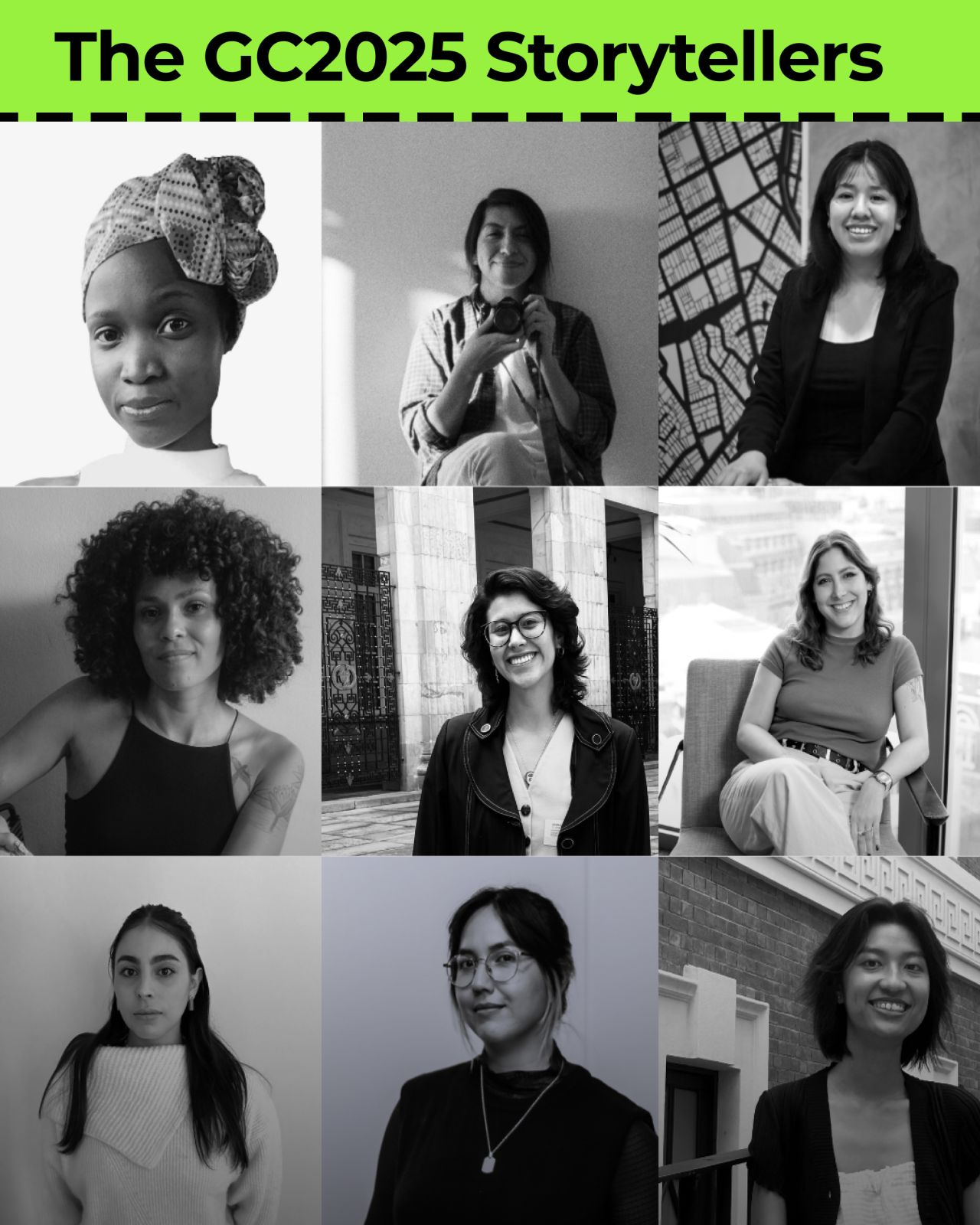
As part of the GC2025 Accelerator, Architecture-in-Development (A–D) invited storytellers to collaborate closely in documenting projects that go beyond the built. These practices weave relationships, restore balance between people and planet, and align science with cultural practices, tradition with innovation.
Within this framework, Natalia Figueredo, together with five other storytellers — Zin, David, Akemi, Mapa, and Sofía— developed a collective piece titled A Lexicon of Care.
Rather than focusing on architectural objects or final forms, the work explored the operational dimension of spatial practices and examined how projects are sustained, cared for, and made possible over time.
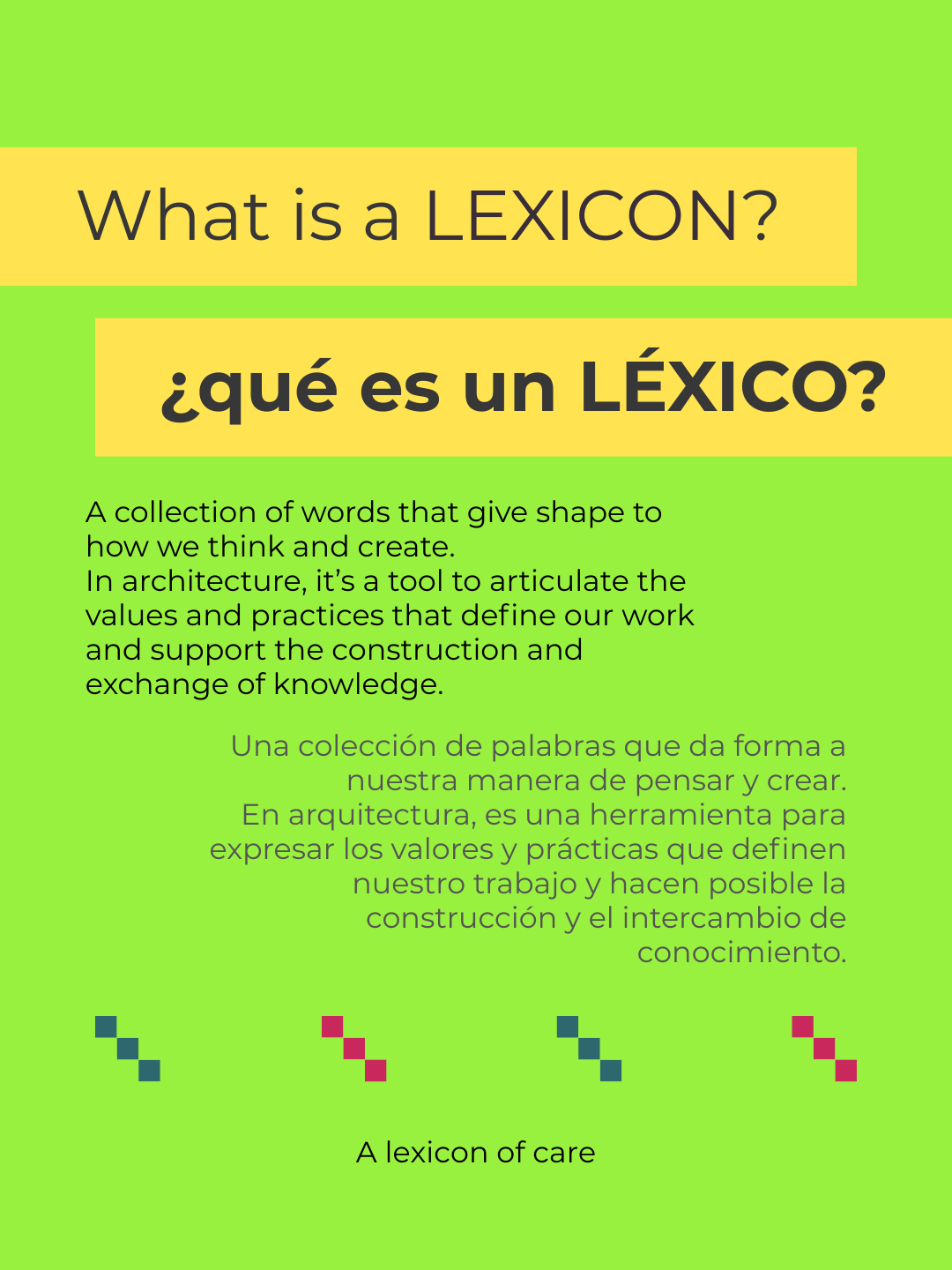
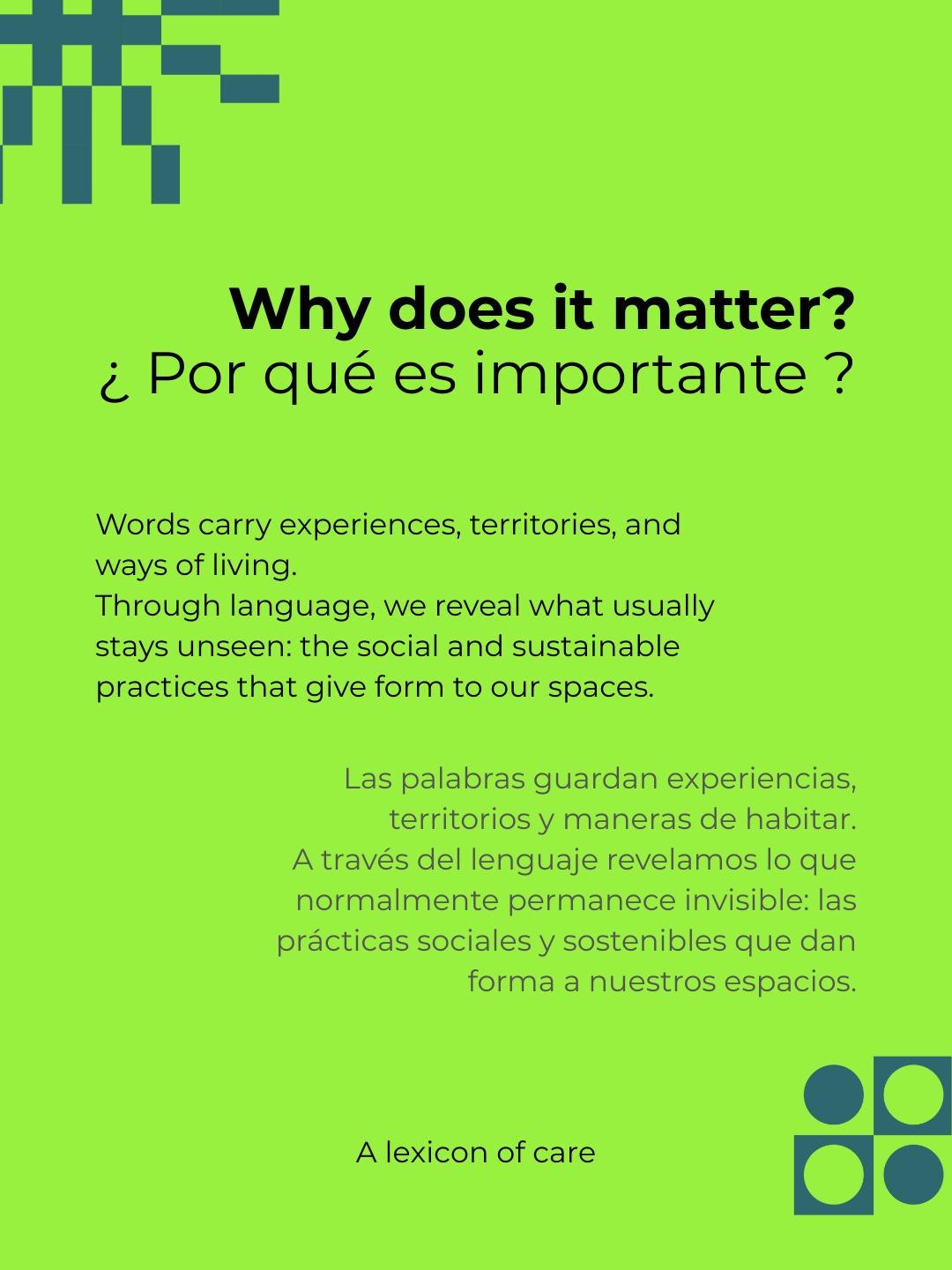
Working bilingually in English and Spanish, the team treated language as relational to practice and territory. Words are not abstract, they carry experiences, territories, and ways of living.
The lexicon was developed in close collaboration with Olón Yaku, a community-based forest school in Ecuador, whose work is deeply connected to territory, ecology, and collective stewardship.
Through conversations, interviews, and shared references, the team identified four key words that captures how spatial practices operate over time and in community:
- Sostener / Sustain
- Minga
- “Solo protejo lo que conozco”
- Stewardship / Corresponsabilidad
The outcome of this collaboration was shared through a series of posts on the A–D Instagram, bringing together text, illustration, and images to communicate the values, ethics, and everyday practices behind Olón Yaku’s work and words. In parallel, a Padlet-based archive was created to emphasize that the lexicon is not a finished product, but an open and evolving tool. Conceived as a shared workspace, it allows the material to be activated, revisited, and expanded in other projects through a clear, color-coded structure.
Rather than fixing definitions, A Lexicon of Care holds the multiplicity of ways in which communities operate Design-in-Time. It offers a way of reading and making visible the relational infrastructures that sustain spatial practices beyond the object.
The project aims to resonate with the practices it learns from, while also becoming a tool for future conversations, translations, and collaborations across contexts.
Developed by:
Illustrations by: @david.peraltai, @cuaderno.mg
Images by: @olon.yaku, @adrichiriboga.fotoyvideo